Halloween is behind us, and just like that, the holiday season is officially here! It’s a time for family, friends, and remembering all the things we hold dear.
I absolutely love this time of year, and Thanksgiving is one of my favorite holidays. There’s something special about gathering around a table with the people you love, sharing a meal, enjoying a good glass of wine, and—if only for a day—slowing down long enough to appreciate it all. No rushing, no schedules, just good food, good wine, and even better company.
Of course, when it comes to Thanksgiving dinner, choosing the right wine can be a little intimidating. Turkey, ham, stuffing, sweet potatoes, cranberry sauce, vegetables, and dessert all bring different flavors to the table. How do you choose a bottle (or two!) that works with everything?
Here’s the fun part: the right wine pairing can make all the difference. Sometimes a wine you wouldn’t necessarily reach for on its own becomes absolutely delicious when paired with the right food. It’s almost like magic!
And the good news? You don’t have to be a wine expert to get it right.
A Little Help from Missouri Wines
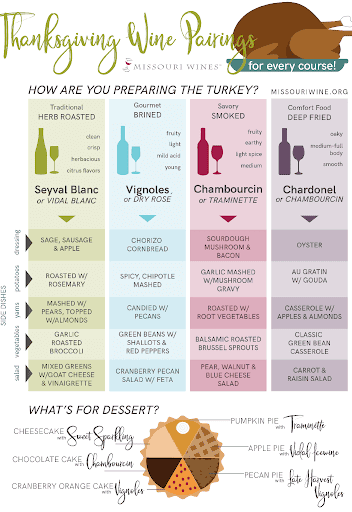
The Missouri Wine and Grape Board has made holiday wine pairing a little easier by putting together a helpful pairing chart. It offers suggestions based on the type of meat, side dishes, and desserts you’re serving.
It’s a great starting point, but what happens when you don’t have a chart handy? What characteristics should you look for when choosing a wine to complement your meal?
Wine pairing really comes down to finding balance. You can either match similar flavor profiles or create contrast between the food and wine. For example, I personally enjoy pairing a dry wine with a sweet dessert. The contrast can help balance the sweetness and allow the other flavors of the dessert to shine.
There are four key components to consider when pairing wine with food: acidity, tannins, sweetness, and alcohol/body.
Six Simple Rules for Pairing Wine with Food
You don’t need a sommelier standing in your kitchen to make good choices. Keep these basic principles in mind:
- Match the Intensity
Light-bodied wines generally work best with lighter dishes, while bold, full-bodied wines can stand up to hearty, rich foods. You don’t want the food overpowering the wine—or the wine stealing the show from your food.
- Consider How the Food Is Prepared
Don’t just think about the protein; think about how it’s prepared. A roasted turkey, smoked turkey, and turkey covered in a rich gravy can all call for different wines. The seasonings, sauces, and cooking methods often have more influence on the pairing than the meat itself.
- Acidity Cuts Through Richness
Think of acidity as nature’s palate cleanser. High-acid wines help cut through fatty, creamy, and rich foods, leaving your palate refreshed and ready for the next bite. Wines like Valvin Muscat and crisp, high-acid reds can be wonderful choices.
- Tannins Love Red Meat
Ever notice that dry, almost cottony feeling in your mouth when drinking a bold red wine? That’s tannin! Tannins interact with proteins and fats in foods, especially red meats, softening the perception of the wine and making the pairing feel smoother.
- Sweetness Balances Spice
Spicy or heavily seasoned foods can make high-alcohol or highly tannic wines taste even harsher. An off-dry or sweeter wine can help tame the heat and bring balance to the dish.
- What Grows Together, Goes Together
There’s a reason regional foods and regional wines often work so well together. Local grapes are shaped by the climate and growing conditions of their region, and Missouri wines offer some wonderful options for pairing with the foods we enjoy here at home.
Understanding the Five Taste Sensations
Another way to approach wine pairing is to think about the five basic taste sensations: sweet, sour, salty, bitter, and umami (savory). Each interacts differently with the structure of wine.
Sweet: Generally, your wine should be at least as sweet as the food you’re pairing it with. When a very sweet food is paired with a dry wine, the wine can taste more acidic, bitter, or less fruity. This is why sweet desserts can make dry wines seem sharper than they really are.
Sour: Acidic foods can make wine taste softer, rounder, and fruitier by comparison. Try matching acidic foods with wines that have good acidity of their own. Think citrus-based dishes paired with crisp, refreshing whites.
Salty: Salt is a wine’s friend! It can soften the perception of tannins and acidity while bringing out fruity flavors. Salty cheeses, cured meats, and savory appetizers are often wonderful wine companions.
Bitter: Bitterness in food combined with heavy tannins in wine can create an unpleasant, overly harsh experience. Instead, try a fruit-forward white or a softer, lower-tannin red. Your palate will thank you!
Umami (Savory): Think mushrooms, roasted vegetables, stuffing, and rich gravies. Savory flavors can make wine taste more bitter, acidic, or less fruity. Lower-tannin, fruit-forward wines are often a better choice for these dishes.
Don't Forget About Missouri's Unique Grapes!
The Missouri Wine and Grape Board’s pairing chart is a guide, not a rulebook. It highlights many of the grape varieties Missouri is known for, but our state’s wine industry continues to evolve as growers experiment with different varieties and adapt to changing growing conditions.
Take St. Vincent, for example. This cold-hardy hybrid grape was discovered in Augusta, Missouri, and has European-American hybrid ancestry. It produces wines with wonderful notes of cranberry, cherry, strawberry, and floral characteristics.
Personally, I love St. Vincent with poultry, pork, and many of my holiday favorites. Its bright acidity and fruit-forward character make it a versatile choice for the Thanksgiving table.
And St. Vincent is just one example! Missouri has a wonderful variety of grapes that can complement everything from your main course to your favorite holiday sides.
So, What Would I Pour at My Thanksgiving Table?
At Shamrock Hills, we believe Missouri wines deserve a place at every holiday table. So, let’s put some of these pairing principles to work!
This year, our Thanksgiving menu includes a special smoked turkey that’s been soaking in a two-day brine of orange juice, apple juice, cloves, and allspice. We’ll also have a spiral-baked ham, our traditional sweet potato soufflé, roasted vegetables, cranberry sauce, rolls, and, of course, both apple and pumpkin pie.
Here’s what I’d pour alongside our Thanksgiving feast:
Smoked Turkey & Spiral-Baked Ham
My picks:
- Spicy Hadley Jo: Our award-winning Best of Show wine brings fruit-forward character and just the right balance to complement the smoky, savory flavors of the turkey and ham.
- St. Vincent Red: This gold-medal wine offers fruit, acidity, and versatility that make it a wonderful match for both poultry and pork.
- 2024 Vignoles: For those who prefer white wine, this gold-medal wine is a refreshing alternative that complements the citrus and spice notes in our smoked turkey brine.
Cranberry Sauce & Sweet Potato Soufflé
Sweet, tart, and full of holiday flavor! These dishes need a wine that can complement their sweetness without getting lost.
My picks:
- 2024 Chambourcin: Its fruit-forward character makes it a nice match for the sweet and savory flavors on the plate.
- 2025 Shamrock Rosé: Our award-winning Best of Class semi-dry Rosé brings bright fruit and refreshing acidity to balance the sweetness of these holiday favorites.
- 2024 Vignoles: A crisp white option that can complement the tart cranberry flavors and balance the richness of the sweet potato soufflé.
Savory Stuffing & Roasted Vegetables
Stuffing and roasted vegetables bring earthy, savory flavors to the table. Depending on the seasonings and vegetables, you may also have some bitterness to consider.
My picks:
- 2024 Chambourcin: Its fruit-forward profile can complement the savory flavors without overwhelming the food.
- 2025 St. Vincent Red: The bright fruit and acidity make this a versatile pairing for roasted vegetables and traditional stuffing.
- Chardonel: For white wine lovers, this award-winning white offers lovely fruit characteristics and enough structure to hold its own alongside these savory dishes.
Apple Pie & Pumpkin Pie
And now for everyone’s favorite part of Thanksgiving—dessert!
My pick:
- Carbonated Vidal Blanc: The bubbles and refreshing acidity help cut through the richness and sweetness of traditional holiday desserts. It’s a fun, refreshing way to finish your Thanksgiving meal!
The Most Important Rule? Enjoy What You Like!
At the end of the day, wine pairing is meant to be fun. There are guidelines that can help you find wonderful combinations, but there are no hard-and-fast rules that say you have to drink a particular wine with a particular dish.
Whether you’re a sweet wine drinker, a dry wine enthusiast, or somewhere in between, there’s a Missouri wine waiting to find its place at your Thanksgiving table.
This Thanksgiving, consider supporting Missouri wineries and putting a few locally grown and produced wines on your holiday menu. You might discover a new favorite pairing along the way!
From our family at Shamrock Hills Vineyard and Winery to yours, we wish you a wonderful Thanksgiving filled with laughter, love, great food, and a glass of Missouri wine.
Sláinte!