
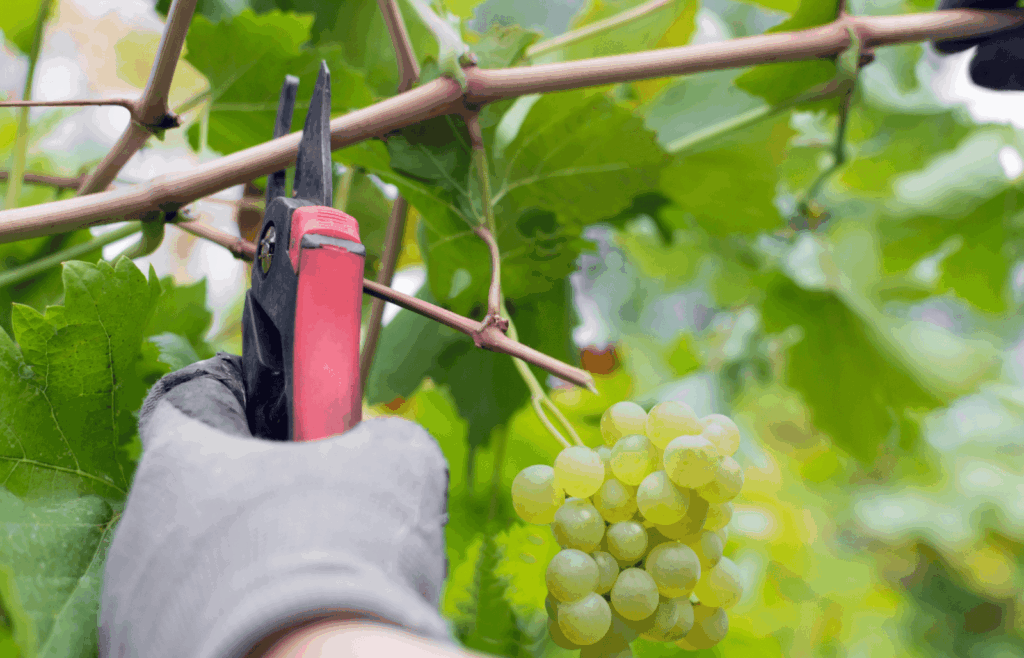
With snow in the forecast, it’s hard to believe that pruning season is right around the corner. Yet February typically marks the start of pruning in our vineyard. Proper pruning is one of the most important factors in producing high-quality Missouri wine, and it’s a task we take very seriously.
Over the past year, Mike has been working closely with a viticulturalist from Texas and will continue that partnership to help ensure the best possible yield from our 4,000 grapevines. It’s amazing to think that this will be the fourth growing season for 3,600 of our vines and the third growing season for the remaining 400.
Why Is Winter Pruning So Important?
Winter pruning plays a vital role in maintaining a healthy, productive vineyard. Its purpose is to balance grape production with adequate vegetative growth for the upcoming season, ultimately leading to better-quality fruit. Timing is everything—if vines are pruned too early, a hard frost can damage buds and canes. That’s why pruning is as much an art as it is a science.
Typically, winter pruning takes place from late January through March. In Missouri, we usually plan for February, though as this year’s unpredictable weather reminds us, the “perfect” date can vary.
Types of Pruning
There are several methods used in vineyards, including cane pruning, spur pruning, and machine pruning:
Cane Pruning: The vine is cut back to one or more canes that will produce new shoots in the coming season. Canes that are removed will not be fruitful.
Spur Pruning: Two to four buds are retained on young canes, spaced evenly along the vine. Older canes, which will not produce fruit, are removed.
Machine Pruning: A method that has gained popularity in recent years, machine pruning uses specialized equipment to trim vines during dormancy by removing old growth and shaping the remaining canes.
Our Approach at Shamrock Hills
At Shamrock Hills, we use the spur pruning method. This approach allows us to closely evaluate each vine, replacing any unhealthy or dead plants while carefully pruning the healthy ones. Without pruning, vines would produce too many grape clusters, becoming unmanageable and unable to support proper ripening. The result would be tangled vines, hidden grape clusters, and fruit that never fully matures.
Pruning may happen in the quiet of winter, but it sets the stage for everything that follows in the growing season—and ultimately, in your glass.
Thank you for the education!